

Stopping Revenue Leakage
How client listening empowers advisory and accounting firms
Client relationships are changing. Is your firm listening?
For decades, technical expertise and trusted relationships have been enough to build successful professional services firms. Today, that's changing.
As AI automates compliance work and clients gain more choice, firms can no longer assume that satisfied clients will remain loyal or that they'll automatically bring future advisory work.
Revenue leakage often happens quietly.
A client stays, but takes their next advisory project elsewhere. A fee increase becomes difficult because clients don't fully understand the value you're creating. Growth opportunities remain hidden because nobody asked the right questions.
The firms best positioned for sustainable growth are those that systematically listen to their clients and act on what they learn.
To help firms do exactly that, HLB partnered with McorpCX to combine industry insights with practical guidance specifically for advisory and accounting firms.

Steve Grivas; Managing Partner of HLB Mann Judd, Sydney
Report key takeaways
Grow existing clients
Stop losing advisory work you never knew was leaving. Most firms focus on winning new clients while overlooking the advisory opportunities hidden within existing relationships.
Differentiate beyond technical skill
Technical excellence no longer differentiates your firm. Great service is expected. Client understanding is the new competitive advantage.
Client listening as a growth strategy
Leading firms don't collect feedback to improve satisfaction scores. They use client insight to strengthen retention, uncover advisory opportunities, justify pricing and shape strategic decisions.


Jason Delles; Chief Growth Officer at Eide Bailly, HLB USA
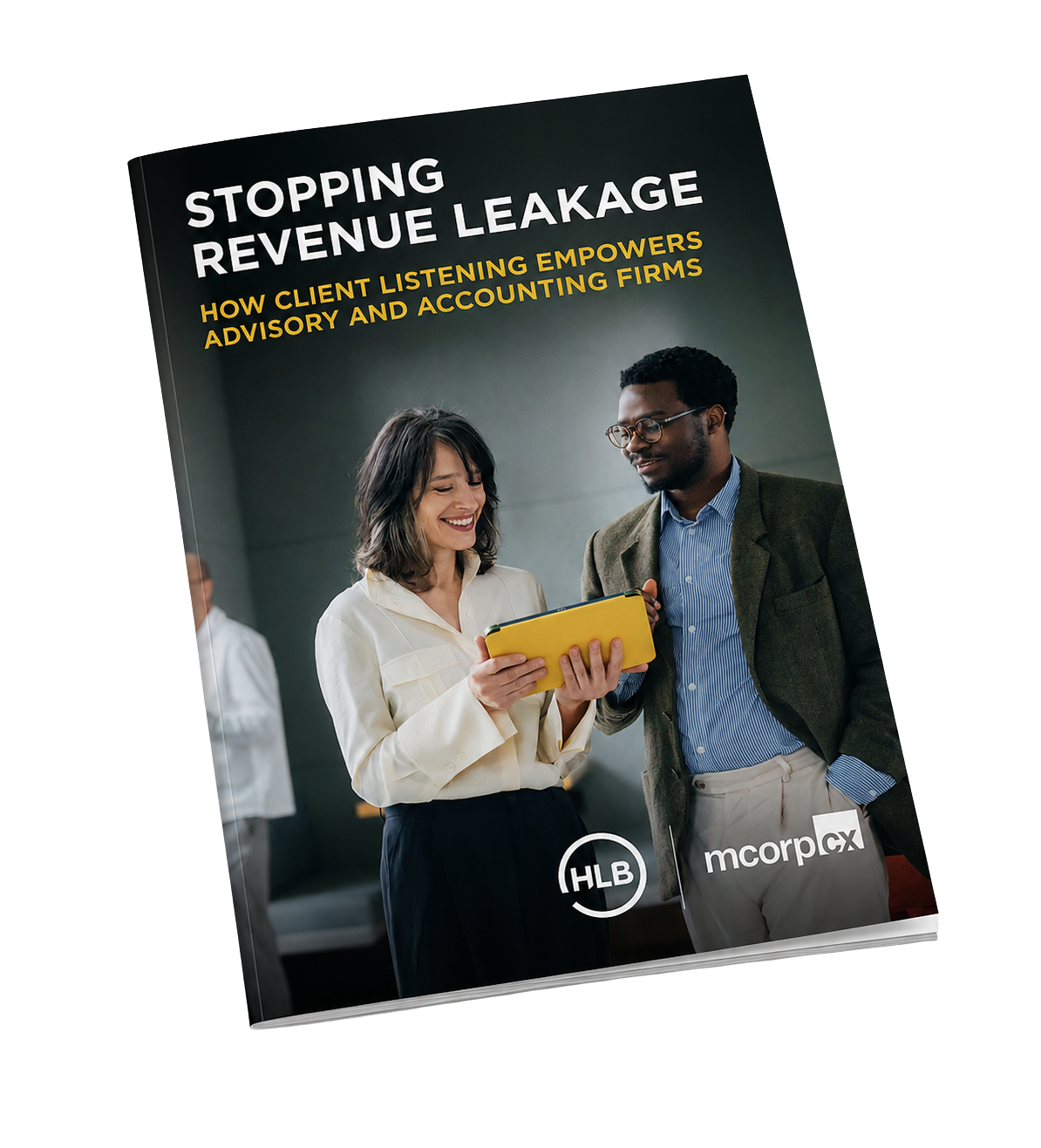
Stopping Revenue Leakage: How client listening empowers advisory and accounting firms
Understand why firms lose revenue from existing clients and discover how leading firms use client insight to improve retention, pricing confidence and advisory growth.
You'll discover:
- Why traditional client relationships are no longer enough
- Where revenue leakage happens inside firms
- The commercial impact of client listening
- Global research, industry benchmarks and firm leader insights
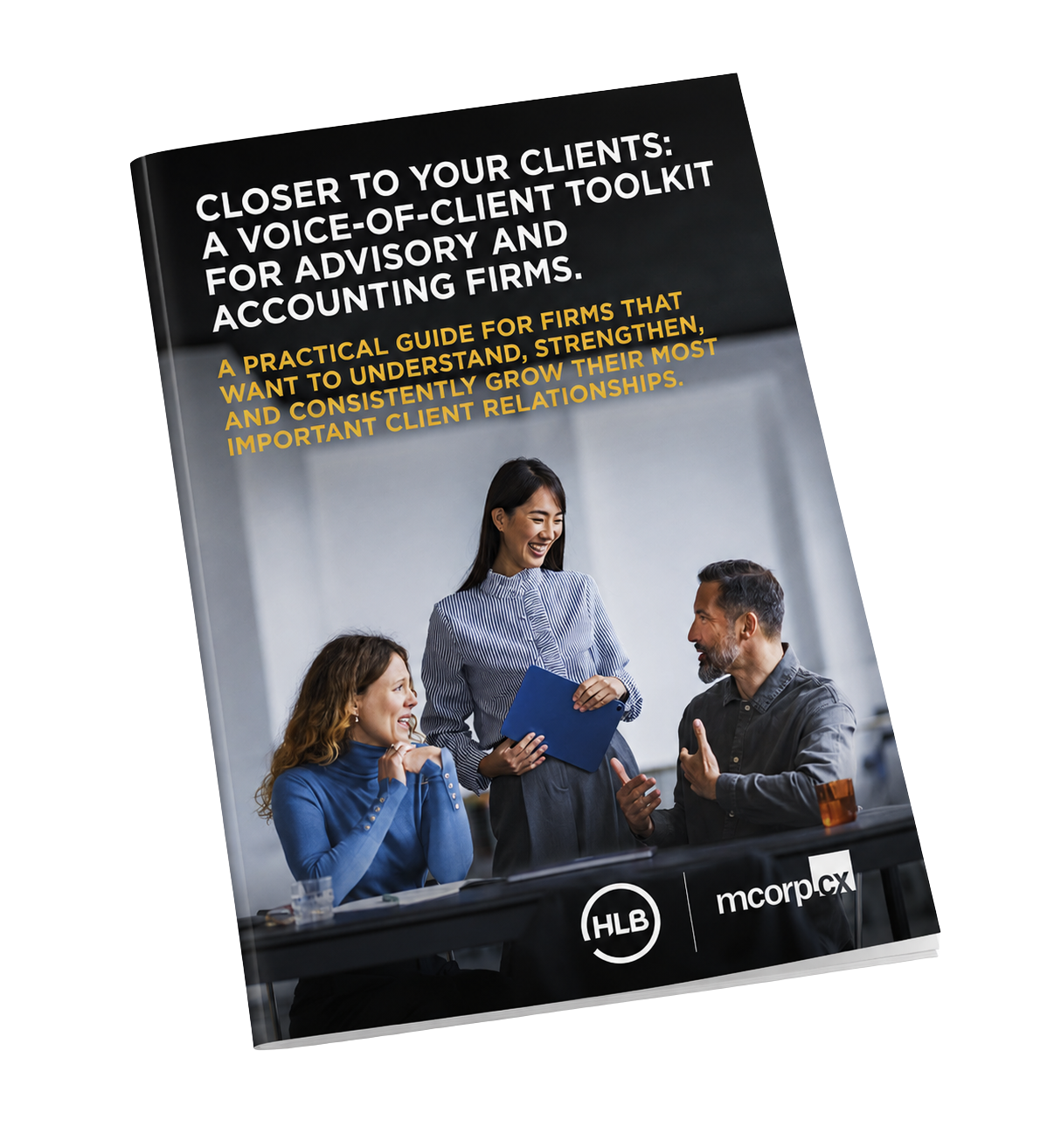
Closer to your clients: A Voice-of-Client toolkit for advisory and accounting firms
Move from theory to action with a practical Voice-of-Client toolkit designed specifically for advisory and accounting firms. Inside you'll find templates, conversation guides, planning canvases and frameworks that help you launch or improve your client listening programme.
Includes:
- Client conversation guides
- Survey templates
- Voice-of-Client planning canvas
- Revenue Radar Map
- Prioritisation framework
- Real-world scenarios

Linda Howard; Senior Marketing & CX Manager at Withum, HLB USA
About the HLB and McorpCX partnership
These resources have been developed in collaboration with McorpCX as part of HLB’s ongoing commitment to advancing client experience excellence across advisory and accounting services.
Launched in 2025, HLB and McorpCX form a strategic partnership with the objective of driving firm differentiation and growth opportunities for HLB firms through client experience maturity. McorpCX is a client experience consultancy and technology partner specialising in experience management, client insight and organisational transformation, supporting firms in building more client-centric organisations.
Methodology
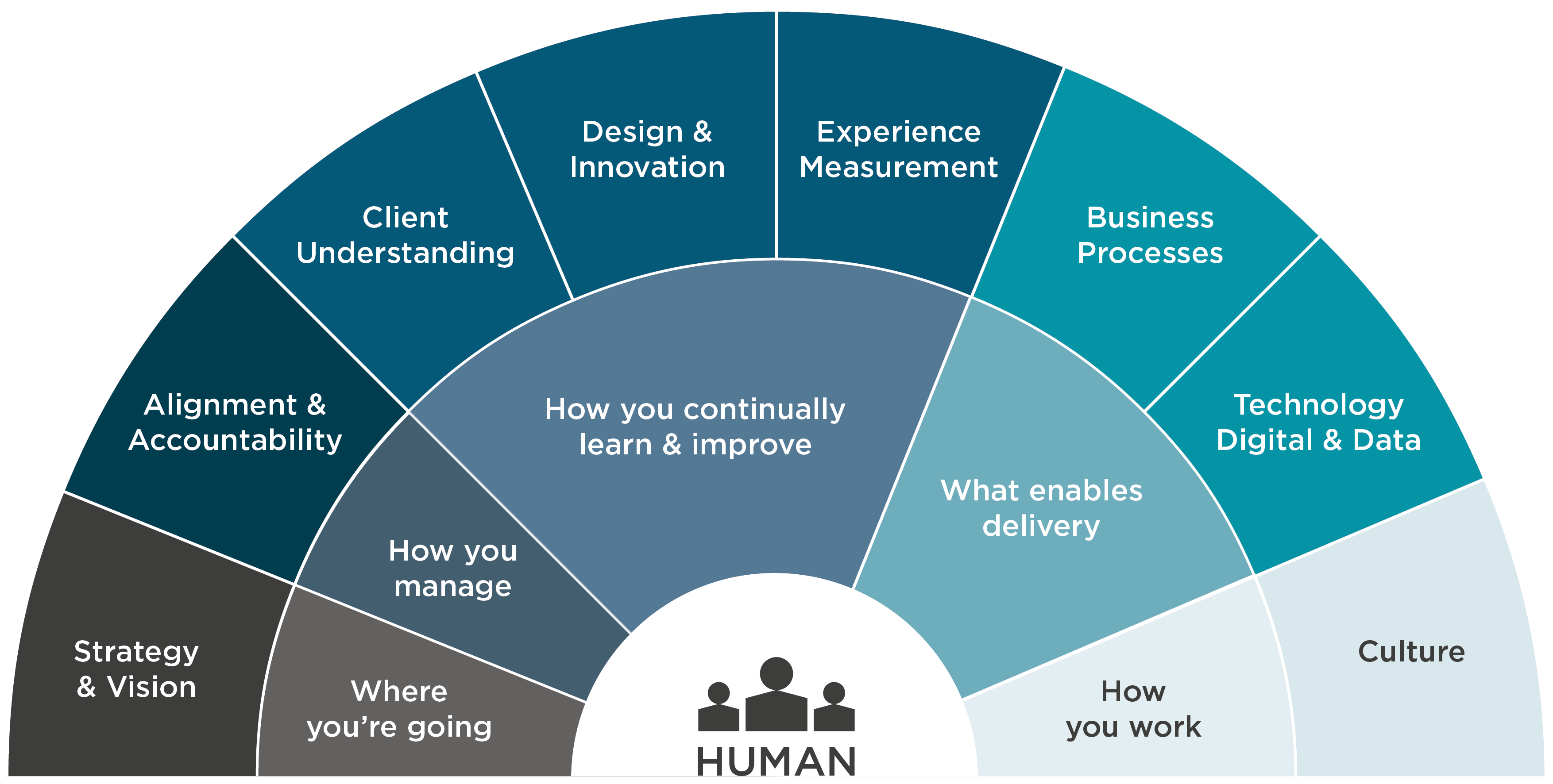
The Experience Operating System™ (XOS) is a client experience maturity assessment conducted by McorpCX on behalf of HLB. The survey provides insight into how well organisations design, deliver and continuously enhance client and employee experiences.
The XOS framework is built around eight experience-led capabilities that together show whether an organisation has the structure, data, processes and behaviours needed to turn client understanding into commercial performance.
For this report, the relevant benchmark is the professional services dataset. XOS Pulse captures respondents’ views of their organisation’s experience management capability, then translates those qualitative inputs into scores across the eight XOS keys. Each capability is scored from 0 to 100 based on the systems and behaviours supporting it.