

Trust: A premium commodity in today’s business landscape

Introduction: Why trust matters more now
Trust has always underpinned business relationships, but the conditions in which it is built and maintained have changed significantly, particularly in the last 5 years. The 2026 HLB Survey of Business Leaders found that all of the top five risks identified by respondents had increased in severity since 2020 and average concern levels across the risk radar reached 63%, the highest since the survey began.
This continually changing environment makes trust more fragile because businesses face greater uncertainty and more frequent disruption, increasing the risk of failing to meet client and stakeholder expectations.
However, trust remains incredibly important because it can influence:
1. Customer and talent retention
Trust strengthens customer loyalty and employee engagement, encouraging long-term relationships, reducing churn and staff turnover, and ultimately supporting business stability and growth.
2. Resilience to change and/or disruption
Trust makes businesses more resilient to change and disruption by maintaining the confidence and loyalty of customers, employees and other stakeholders, enabling them to adapt more effectively and recover more quickly from setbacks.
3. Recommendations from clients and partners
Trust encourages clients and partners to recommend a business to others, strengthening its reputation, generating new opportunities and supporting long-term growth.
So, in today’s business landscape, what does it take for a business to be genuinely trusted?
The challenge for businesses then is to adapt to any shifts quickly enough without undermining the confidence stakeholders place in them. This report explores exactly why trust is becoming a strategic asset as organisations navigate AI, cyber risk, regulation and global complexity.
Trust is becoming harder to earn – and easier to lose
Sources of mistrust might include events like poor governance, data breaches, weak leadership, inconsistent communications, regulatory failures or opaque use of AI. Increased transparency and the ease of information sharing mean mistakes and inconsistencies are harder to contain. A gap between what a company says and what it does is hard to hide and can quickly undermine credibility.
Digitalisation has played a big role in changing how customers trust businesses. For example, organisations increasingly ask customers and employees to trust them with data, while they also automate more decisions and use third-party technology providers, requiring implicit trust. Breaking that trust has a tangible commercial impact: the Thales 2025 Digital Trust Index found that 82% of consumers had abandoned a brand in the previous 12 months because of concerns about how their personal data was being used.
As a result, businesses need to demonstrate that they can manage change and introduce the use of technology responsibly.
Abu Bakkar, Chief Innovation Officer at HLB International says: “Clients across industries are concerned about what happens when business, financial and customer data is fed into AI systems, particularly the increased risk of exposure. But businesses face competitive risk if they avoid technological change altogether.”
Trust as a commercial asset
| High levels of trust support: | Low levels of trust can result in: |
|---|---|
| Stronger client retention | Lost customers |
| Referrals and advocacy | Reputational damage |
| Greater willingness to expand relationships | Slower sales processes |
| Customer openness to new products or technologies | Reduced willingness to share information |
| Resilience when something goes wrong | Difficulty rebuilding relationships after an incident |
| Stronger reputation with employees, partners and investors | Greater scrutiny |
Trust becomes commercially valuable when it changes stakeholder behaviour. For example, Forrester found that 83% of global B2B purchase influencers who trust a company would recommend it to others externally. Existing customers recommending a business to others can be more powerful than anything written on the corporate website.
HLB Survey of Business Leaders
of leaders have prioritised customer feedback programmes over the previous 12 months.
In a B2B scenario, high levels of trust can contribute to better client retention, placing less pressure on the new business pipeline. Firstly, client retention is likely to be higher because strong relationships based on trust have been forged, and secondly, these clients are likely to be more receptive to new services and expanding their relationship.
This then means that firms don’t have to focus so much on replacing lost business, and can focus instead on expansion whereas, without a strong level of trust, companies have to work harder and spend more time on attracting prospects and closing deals, just to maintain their existing revenue levels. As a result, trust is an important driver of sustainable growth and means that businesses don’t have to rely on what could be an unpredicatable new business pipeline.
AI, cybersecurity and the new trust equation
AI and human accountability
Technology is changing how trust is earned, rather than making it less important. Trust is likely to depend less on whether a business uses AI and more on how responsibly and transparently it uses it; therefore, businesses increasingly need to demonstrate how AI is being used.
Stakeholders may accept automation, but still expect someone to be accountable for accuracy, fairness, privacy, errors and decision-making. The HLB Survey of Business Leaders shows that companies are responding to this: 62% of business leaders are increasing investment in automated and AI-powered decision-making.
Businesses should therefore consider how they manage aspects like human oversight, accountability, disclosure where appropriate, governance around sensitive data and escalation when AI produces questionable outputs

Jim Bourke, HLB Global Technology & Advisory Services Leader
Cybersecurity as a trust issue
Businesses are recognising that cybersecurity should no longer be framed solely as an IT responsibility; this is partly due to the influence it can have on trust. It is particularly important for companies that hold lots of data, and data of high ‘value’ such as financial information, personal data, commercially sensitive information and intellectual property.
A cybersecurity breach, and how a company reacts to it, tells customers about its governance, risk management, preparedness and how seriously the company takes stewardship of their information.
HLB Survey of Business Leaders
of business leaders are concerned or very concerned about cybersecurity.
It is therefore important that the board has a role in cybersecurity trust. The World Economic Forum says cybersecurity is increasingly a matter of corporate governance and board-level accountability, with boards ultimately responsible for managing cyber risk even where operational responsibility is delegated to a CISO. Additionally, as technology becomes more sophisticated, businesses cannot assume routine IT functions automatically provide the specialist expertise required to manage cyber risk.
Ultimately, technology itself does not create or destroy trust, but governance, accountability and behaviour determine the outcome.
Trust is demonstrated through behaviour, not statements
Businesses increasingly communicate commitments around transparency, ethics, security, sustainability and responsible AI. But trust cannot be built solely through corporate messaging, value statements or compliance certificates; stakeholders judge whether those commitments are reflected in behaviour. Recent research found that customers who perceive a company as transparent are twice as likely to buy additional products or services and almost four times as likely to forgive mistakes.
Compliance with regulations is important for supporting trust, but it cannot substitute for trustworthy behaviour. After all, a business can meet minimum requirements while still behaving inconsistently or communicating poorly. Regulation establishes a baseline of what is required, and reporting and assurance can improve transparency, however, compliance alone does not prove that an organisation is trustworthy.
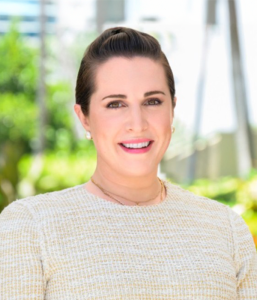
Jennifer Chowhan, HLB Global Assurance Leader
Can businesses measure trust?
Trust should be managed deliberately, but leaders should resist reducing it to one metric; instead, a blend of qualitative and quantitative trust indicators is key. As Jim Bourke says: “Organisations can become overly focused on metrics, while direct feedback from customers can provide a more meaningful view of whether trust actually exists.”
| Useful quantitative indicators of trust: | Useful qualitative indicators: |
|---|---|
| Customer retention | Customer interviews |
| Customer referrals | Conversations with key accounts |
| Net Promoter Score/customer advocacy | Employee feedback |
| Complaints and complaint resolution | Post-project reviews |
| Employee retention | Stakeholder interviews |
| Employee sentiment | Reasons why clients leave |
| Supplier and partner retention | Reasons why they stay |
| Cyber incidents | |
| Regulatory breaches | |
| Reputational issues | |
| Stakeholder willingness to expand relationships |
Conclusion: Trust will depend on how well businesses manage change
The next five years are likely to bring more change rather than less. As AI capabilities evolve, cyber threats will become more sophisticated and regulatory expectations will continue to change. As a result, stakeholders will expect greater transparency.
The businesses that maintain trust will therefore need to show competence, consistency, accountability, adaptability and perhaps most importantly human judgement to build and maintain trust.
Ultimately, trust is not created by claiming to be trustworthy. It is accumulated through repeated evidence that an organisation can be relied upon to make responsible decisions, deliver on its commitments and respond effectively when circumstances change.
Your organisation can work with specialist HLB advisers to help adapt to the changing business landscape in key fields such as cybersecurity, technology advisory, global accounting and compliance, risk assurance and data analytics & business intelligence.
Related content